
Editorial independence

Editorial Board

Meet the scholars and practitioners who steward the journal’s editorial standards.

Editor-in-Chief

Editor-in-Chief

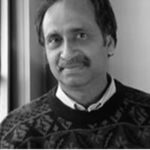
Praveen Sharma

Salem State University

USA

Praveen K. Sharma is an internationally recognized technology executive, cybersecurity strategist, educator, and researcher with more than 30 years of experience driving innovation across networking, cloud computing, artificial intelligence, cybersecurity, and enterprise operations. As Director of Cyber Range Operations & Strategic Partnerships at Salem State University, he leads one of the region’s emerging centers for cybersecurity education and experiential learning, developing partnerships with government agencies, Fortune 500 companies, and technology organizations to strengthen workforce readiness and cyber resilience. Before joining academia, Praveen spent over 25 years at Cisco Systems, where he led global engineering, customer success, and mission-critical deployment programs for large-scale service provider networks. He later managed IBM Global Hybrid Data Centers over 5 years, IaaS operations, AI-enabled cloud transformation, observability, and capacity management. He also worked as Scientific Officer developing academic research network at Computer Science department, of Indian Institute of Technology, Delhi, India.
Praveen holds undergraduate and graduate degrees in Computer Science and Engineering, with a specialization in data networking, along with multiple professional certifications in cybersecurity and networking.

Editorial Board Members

Editorial Board Members

Dr. Abhinav Aggarwal

IIS Gobal

USA

Dr. Abhinav Aggarwal is the inventor of environment-friendly power generation techniques by tapping solar energy, freeze power turbine to generate power by tapping atmospheric cold, unique human and patient monitoring and rescue systems, virtual green currency, and of a framework based on Flexibility Integration and Automation that helps evaluation of IT solutions prior to implementation for effectiveness. In a diversified international career over 30 years and across continents, he has architected, designed, and developed technical solutions to complex business and social problems. He has applied systems dynamics modeling for researching solution to complex engineering problems, has been an adjunct faculty at engineering schools, and guided several research projects. He has architected, designed, developed and implemented several solutions for sustainability and is leading prototypes for bamboo houses www.our-bamboo.com www.divine-healer.com Multiple patents; 45 technical research papers, published several books. IEEE Eastern North Carolina Past Section Chair and led IEEE R&D Committee on Vision of Technology, International Keynote/plenary speaker. His forthcoming book is ‘Respect – bring our compassion together to heal Mother Earth’ www.1world1nation.com He has been teaching integrated yoga for past 30 years and keeps inventing new techniques, as revealed to him directly by Lord Shiva (authored Face to Face with Shiva and Sept 11: A Wake-Up call) and founded www.zeropatent.com to bypass greed of the patenting process. Ph.D. in IT from IIT Delhi, M.Tech in Systems and Management from IIT Delhi, B.S. Engineering in Electronics, PEC, India, Open Group. Distinguished Chief Architect, and an IBM Distinguished Engineer. He migrated to USA in 1999 and has worked across the globe. He is the founder of futurecity Inc, www.futurecityinc.com an engineering consulting firm, and founding president of SFUO, www.SFUO.org a non-profit organization promoting the application of science, technology, and engineering for world peace and climate healing.

Editorial Board Members

Derek Chu

HPE Inc

With over 25 years in high tech. Three Cisco CCIEs. Five AWS certifications. CISSP. Cornell-certified in cybersecurity and AI digital transformation. I’ve worked across ASICs, networking, cloud, security, and AI — and I’ve spent years focused on the security architectures that protect modern enterprises: SDWAN, SASE, SSE, NGFW and Zero Trust technologies.

Editorial Board Members

Toby Grotz

USA

Toby Grotz is an electrical engineer with a background in power systems design. He has designed electrical systems for coal, natural gas and nuclear power plants. Mr. Grotz has been effectively managing projects in the energy and utility industry and researching alternative energy systems for 40 years. Work experience includes design and support for capital improvements for power plants rated up to 1800MW. He has conducted research on hydrogen gas generators, advanced lighting circuit design for plasma arc lamps, investigated and conducted experiments on Cold Fusion Systems and Low Energy Nuclear Change phenomena in arc discharge systems, Tesla’s Wireless Transmission System (100 KVA, 20 MV system), non-inductively would coils, mirror image symmetry windings and many other phenomenon during his career. His understanding of resource depletion and its relation to worldwide energy usage and electrical generation comes from his work at the beginning of his career exploring for fossil fuels in coastal waters on the East Coast of the USA and in the deserts and jungles of Mexico. Mr. Grotz began his relationship with Mr. Tewari using a typewriter in 1983. He has visited Mr., Tewari’s lab eight times since 1993 and conducted measurements of Tewari’s electrical equipment with test equipment certified to be compliant with the National Bureau of Standards. In 1997 he put www.tewari.org online in order to present the theories and experiments conducted by Mr. Tewari to a worldwide audience. Mr Grotz has organized and chaired conferences examining new thoughts in physics. He organized and with Dr. Elizabeth Rauscher chaired the 1984 Tesla Centennial Symposium. He also served on the steering committee organized to host the first International Symposium on New Energy held in Denver in April of 1993 and was chairman of the 1994 International Symposium on New Energy and President of the institute for New Energy. Mr. Grotz received his BSE in electrical engineering from the University of Connecticut.

Editorial Board Members

Dr. Vishwambhar Pathak

Birla Institute of Technology (BIT)
Department of Computer Science & Engineering

India

Dr. Vishwambhar Pathak, Assistant Professor at Birla Institute of Technology (Mesra) Off-Campus Jaipur, India, has 24 years of experience including teaching, research, and academic operations. He earned his Ph.D. in Computer Science in 2014 from Banasthali Vidyapith, Rajasthan. His specialization is in Explainable Lightweight deep learning with focus on spatio-temporal-spectral pattern recognition in multivariate time-series data with recent works on neuromarkers for brain-disorder detection using EEG. He current research includes quantum-advantage in Quantum-Classical Machine Learning and he has received QPU access under IBM’s Quantum Program. His doctoral work pioneered density‑conscious artificial immune systems for unsupervised learning, and his subsequent research has advanced hybrid frameworks for anomaly detection, causal connectivity analysis, and neuroinformatics applications.

Editorial Board Members

Dr. Sailesh Rao

Editorial Board Members

Dr. Magreth Mushi

IEEE
Eastern North Carolina Section (ENCS)

USA

Dr. Magreth Mushi is Platform Director for the Aerial Experimentation and Research Platform for Advanced Wireless (AERPAW) and a Researcher at NC State University. She oversees operations, development, and outreach for the platform and its North American Open RAN Testing and Integration Center (OTIC). Dr. Mushi is also leading initiatives for maintaining, enhancing, and strategically growing AERPAW and OTIC facilities, resources, and programs, ensuring their fiscal sustainability. She has also been instrumental in researching and developing AERPAW’s backplane network and virtual environment architecture. Before joining AERPAW, she was the CEO of the Tanzania Education and Research Network (TERNET), leading broadband infrastructure projects between Africa and Europe.

Editorial Board

The Editorial Board safeguards the quality, independence, fairness, and integrity of IIS Journal. Bringing together expertise from across sustainability disciplines, the Board provides the scholarly and methodological knowledge needed to evaluate interdisciplinary research responsibly and uphold the journal’s editorial standards.

Independence and Conflicts of Interest

Editors and Editorial Board members must disclose any financial, professional, institutional, academic, or personal relationships that could influence—or appear to influence—their editorial judgment. Manuscripts submitted by Board members, IIS employees, institutional leaders, sponsors, or close collaborators are assigned to an independent editor to ensure a fair and impartial review. Where appropriate, relevant relationships are disclosed in the published article.

Join the Editorial Board

IIS Journal welcomes expressions of interest from experienced researchers whose expertise aligns with the journal’s editorial needs. Prospective members should provide a current CV, institutional affiliation, researcher identifier (such as ORCID), areas of expertise, selected publications, editorial or peer review experience, and a brief statement describing how they can contribute to the journal.

Appointments are based on academic expertise, research integrity, editorial experience, responsiveness, diversity of perspective, and the journal’s current needs. Editorial Board membership is voluntary, merit-based, and is not granted through article submission, institutional position, or financial contribution.

To express your interest, please contact the Editorial Office at [email protected]